I declare 2015 the Year of Empathy (for substantive Craftsmanship)

Tomorrow the first regular working week of the New Year starts. Even though I didn’t take time off (the fate of an independent entrepreneur 😉 ), I slightly resent to go back to work. My schedule is loaded for the coming six weeks (okay, one week of skiing included), and in spite of most projects being fun, it means there’s a busy and stressful period ahead of me. Tomorrow morning at the office we start with a New Year’s breakfast and a New Year’s talk to go with it, on which I’m pondering right now.

At Christmas I talked briefly about “time” and “cooperation”. Emotionally time moves faster and the older you get, the more precious the time ahead of you becomes, per time unit. The word “cooperation” gives me mixed feelings. I think the word in itself belongs to the category ‘sweet talk’ with which nothing is said. On the other hand, in a complex world ‘cooperation’ is indeed a key word. Especially cooperation between ‘craftsmen’. I emphasize this because of my dwindling respect for people who only ‘analyze’ and ‘communicate’ without adding substantive new worth. This can be noticed especially in newspapers (yes, also the high quality ones) and on different blogs. But even the ones who aim at new innovation, the level of conversation remains ‘vague’. At the end of the day I think it’s all about creativity, realization and substance. #Do! I call it. For this you need teams of professionals who are substantively strong (hence Craftsmen) AND have sufficient knowledge diversity AND can cooperate as a team.
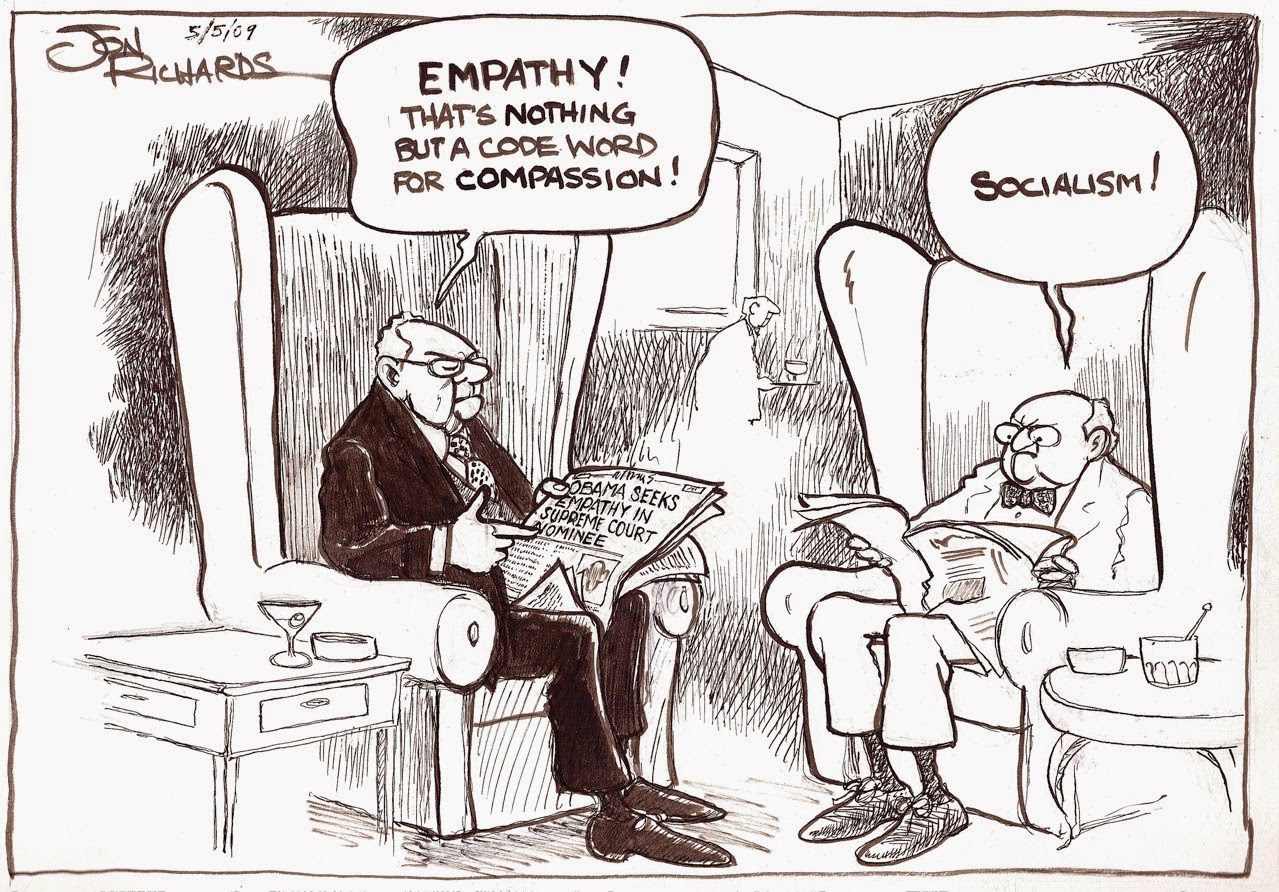
Back to the New Year’s talk. I think tomorrow I will talk about Empathy and about Craftsmenship. In 2013-2014 at TOP we did an improvement project directed by my Management Team, in which we declared the skill ‘designing’ as central basic skill for all our projects. Designing of processes virtually always moves along the following steps:

(1) package of requirements; (2) concept design; (3) detail design; (4) realization of the design.
Also four core values are important in design processes:
(a) client sensitivity; (b) focused towards your aim; (c) usable and unique content; (d) (the will to deliver) outstanding quality. I think at the moment the emphasis is too much on analysis and communication, but those are no more than useful tools. Synthesis (developing, designing) and forming new interrelations are in my opinion more important in these modern times. That’s why #Do! Is my motto.

Especially the word client sensitivity seems to be a difficult concept for many TOPpers. To me it’s not only to do what the client says, but foremost do what is in the client’s interest. Most of our clients don’t realize what they should want. “What would you do if you walked your client’s shoes?” To be able to answer that question is crucial for a company like TOP. Client sensitivity can be developed if you go through a personal development in two fields: your empathic ability, and your substantive qualities. I use the word ‘client’ on purpose, in the broadest sense of the word. A MT-member, a Director or Project Leader can be seen as client by a project team member or employee.

In my experience, just having good empathic skills, or just being substantively strong does not guarantee a strong client sensitivity. You only get to be substantively strong after many ‘flight-hours’. In short, if you regard your job as a craftsmanship and become a professional.

Empathy – being sensitive to an others’ needs – maybe is a skill that you can develop. At least I would very much like all my own people to become consciously incompetent.

This morning I watched an inspiring RSA video about Empathy. Not personal development (up until the crisis in 2008 it was all about ‘me’), but the development of the individual and collective empathic abilities are relevant to the next cycle of Kondratieff. And if we can connect that to a strong substantive knowledge (in short substantive Craftsmanship) than I’m on top of the world.

Now idea what my talk in the morning will be like, but I’m sure going to use the words ‘Empathy’ and “Craftsmanship’. I summarize these two words into ‘client sensitivity’. Therefor I hereby declare 2015 the Year of Empathy (for substantive Craftsmanship).
This is a translation of a Dutch article.

About Niger seed, Superfoods and Powerhouse Fruits & Vegetables (PFV) – no harm in keeping on consuming.

Food and health is hotter than hot at the moment. Mainstream media like newspapers Volkskrant and NRC but also television publish one after the other article or program. Unfortunately they don’t always contain a lot of journalistic quality, but at the same time I’m content with any publicity this subject gets. #Softpaleo gets more and more positive attention (although it’s always fun to enter into some point-scoring contest or to describe it as a mere trend). This is a good thing, because in my opinion the Dietary Centre (ergo also the Health Council) are always one step behind. The hype of the last year of course is superfoods. Nothing wrong with these highly concentrated products, a good supplement to a healthy food pattern, but if you eat poorly you don’t get any healthier by consuming some extra chia seeds.

The TV show “Keuringsdienst van Waarde” (Inspection Authority of Value) devoted two broadcasts to the subject. Good television isn’t about content, but about ratings. TOP cooperated in the last broadcast. There was criticism from the foodies, which I largely understand. Why ridicule all types of seeds – the most recent broadcast was about Niger seed – while the real un-health lies in the sugary, salty packs and bags of the big-food. Why then this attention to the innocent superfoods? I can understand these pleas, and yet I was proud of our contribution, also now in hindsight. You see, what this broadcast illustrated is how clever marketing, use of paid bloggers (indirect advertisement), infiltration through a group of consumers who simply like ‘health and food’, can lead to making a hype of new products. You could say food innovation anno 2015. Especially the naivety of many passionate consumers combined with advertisement through paid bloggers simply results in extra sales.

The public broadcast stopped being free of judgement and in fact depends on advertisement income just as much as the commercial broadcasts. Newspapers have become more and more advertisement platforms and the little bloggers really do need to make a living. It’s naïve to think those sympathetic foodies always tell the truth. In America the food babe has become a celebrity, but I reckon that this lady also has a good business model. Don’t get me wrong, I’m fine with that. I myself am an entrepreneur. But if you think it makes the blogs free of judgement and independent, you’re at fault. Just to make sure: this blog is free, does not contain any advertisements and I have not been nor ever will be paid for an article her on F4l. Despite my scientific background I prefer to remain the little boy telling the emperor he’s running around naked. “The more I know, the more I realize there’s much more I don’t know”, is one of my recent and still valid quotes.

Back to superfoods. Plugging Niger seed is just a pretty business case. Nobody in my team will declare in an earnest tone to start consuming this ‘superfood’. I don’t feel like wasting more words on this. What I believe to be healthy food can be found on this blog, and more consumption of superfoods to the detriment of the consumption of bread, coke or chips can only be recommended.

But what are these superfoods? You could say they are products with a high concentration of bioactive components and minerals per 100kcal of energy. I deliberately use “per unit of energy”, nog “per mass unit”. Vegetables for instance contain a lot of water, but the dry substance that is still in there often is very healthy. A dried prune on the other hand is also a sugar bomb because all the water is evaporated, therefor it’s not wise to eat too many dried prunes. In short, “health per kcal” is a much better standard. In America the CDC (comparable to the Dutch RIVM) recently published a scientific article trying to define what they call Powerhouse Fruits and Vegetables (PFV). I like this approach. A PFV must score over 10 points to earn a place on the list. See their top 50 list below.

I think I’m able to predict the next discussion: “nutrients thinking is imprudent, it is about the matrix, and food is more than thinking substances”. Yes, that’s right. Our body is a complex adaptive system (CAS). Many inputs, many reactions and complexities. We are on the brink of better understanding the epigenetics (how our environment influences gen-expression). Food patters and lifestyle go hand in hand and sometimes you just draw the short stick with a bad gene package. The long-standing advice of professor Tiny van Boekel still holds for superfoods and PFV: “There are no healthy or unhealthy food products, but there are healthy or unhealthy food patterns.” My generic advice remains: the #softpaleo food pattern, eat abundant colors.  In addition to that: “Nothing wrong with PFV or other superfoods as component of a healthy food pattern.”