The Role of Surface Roughness in Shaping Aerodynamic and Boundary Layer Resistance: Insights into Deposition Velocities and Environmental Modelling

The concept of deposition velocity plays a crucial role in modeling how pollutants transfer from the atmosphere to the surface. This process is controlled by three main resistances: aerodynamic resistance (Ra), boundary layer resistance (Rb), and surface resistance (Rc). Each of these resistances serves a unique purpose and depends on various environmental and physical factors.

The first, aerodynamic resistance (Ra), represents the resistance that air exerts on pollutants moving downwards through the atmosphere. This resistance is influenced by the wind speed and the roughness of the surface, meaning that higher wind speeds and rougher surfaces (such as in urban or forested areas) reduce RaRa, thereby enhancing pollutant transport to the surface. Aerodynamic resistance thus forms the primary pathway for pollutants in the atmosphere, pushing them toward the ground.

Boundary layer resistance (Rb), the second resistance, occurs within a thin layer of air just above the surface. Here, air movement becomes more organized, flowing in layers rather than turbulently. The thickness and resistance of this layer depend on the pollutant properties, as well as environmental conditions like temperature and turbulence. The boundary layer acts as a transitional zone, where deposition slows slightly before pollutants reach the ground.

The final resistance, surface (or canopy) resistance (Rc), depends on how easily the surface itself absorbs the pollutant. For gases like ammonia, specific factors, including surface moisture and the acidity of the land or water, play a large role in this resistance. Surface resistance varies with land type and vegetation; a forest, for example, might absorb pollutants differently than a grassland or water surface. Unlike the previous resistances, which primarily relate to atmospheric conditions, RcRc reflects biological and chemical properties of the surface, influenced by factors such as the leaf area index (LAI), surface moisture, and the respiration rate of plants.
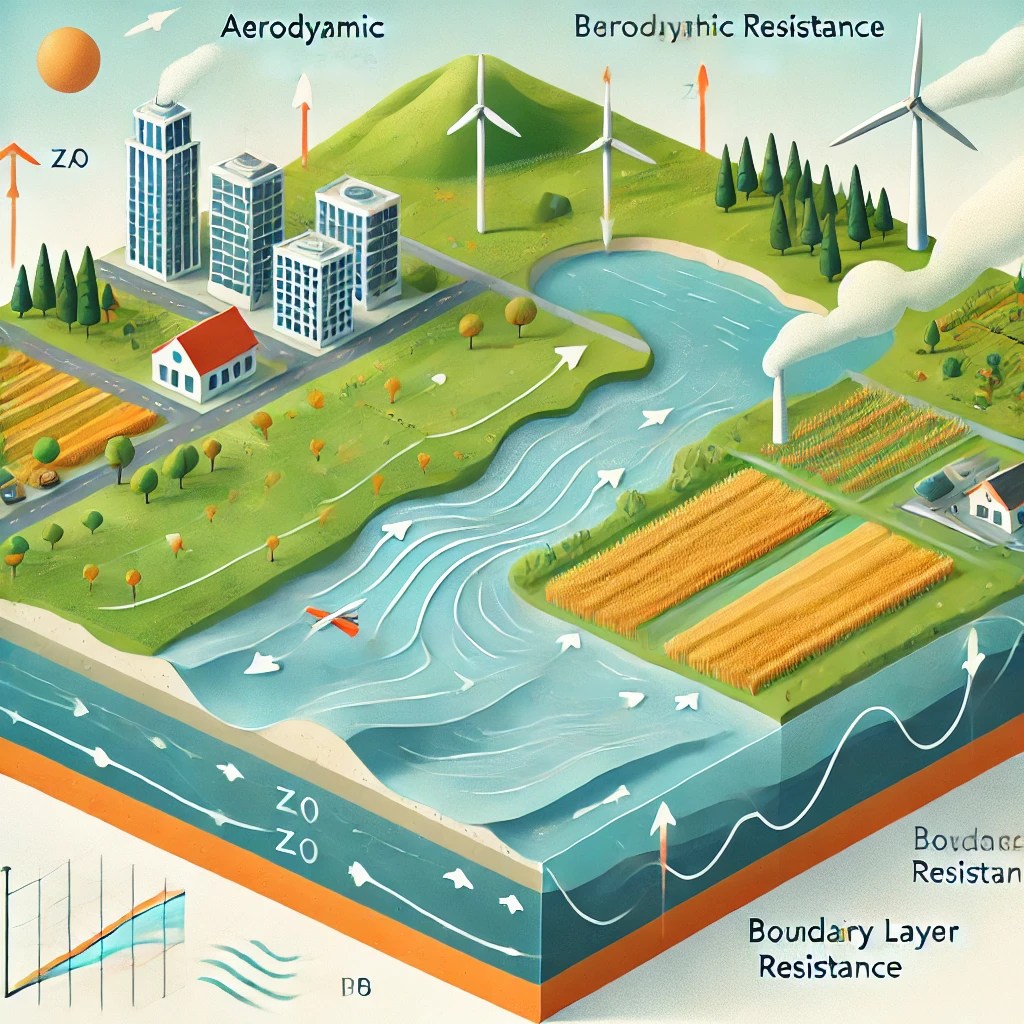
Mathematically calculating the values of Ra and Rb requires several key parameters, with roughness length (z0) and displacement height (d) being particularly important. Roughness length reflects the impact of small-scale surface elements (like crops, grass, or buildings) on air movement, and it varies significantly depending on the land type.

In the Netherlands, for example, agricultural areas generally have a roughness length around 0.1 m, while urban areas measure closer to 1.0 m, and water surfaces show a minimal roughness length near 0.0001 m. Displacement height, on the other hand, represents an effective height above the ground where the average airflow is impacted by obstacles, such as trees or buildings, and is usually set at approximately two-thirds of the height of these roughness elements.

The influence of roughness length and displacement height on aerodynamic and boundary layer resistance can be visualized effectively in a graph, as shown below, which reflects typical values for different land types in the Netherlands.

Although the physics behind aerodynamic and boundary layer resistances is well understood, enabling us to calculate these resistances with relative ease, surface resistance (Rc) remains a complex variable. Its dependency on vegetation type and environmental conditions means it requires further experimental investigation, especially across various types of vegetation and land use. Improved understanding of Rc could significantly enhance the accuracy of deposition models, which are essential for environmental policy and air quality management.

Also about this subject, the following articles:

Understanding Dry Deposition: Mechanisms, Modeling Challenges, and the Complexities of Ammonia’s Interaction with Different Surfaces in Environmental Systems

Dry Deposition – What is it?

When we think of wet deposition, it’s easy to imagine ammonia (or NOx) dissolving in raindrops and falling to the ground in a form that enriches the soil. But what about dry deposition? Molecules like ammonia can’t just “fall” to the ground, nor do they rise on their own. In the previous chapter, we discussed how turbulence in the mixed layer allows for dispersion in all directions. So, if molecules can’t fall, what mechanisms bring ammonia to the ground? The scientific literature is sparse, so we refer to a source called De Vliegende Geest.

The dry deposition flux is determined by the concentration in or on the leaf (in the water layer) and the level of turbulence in the atmosphere. Higher turbulence leads to more transport from the air to the surface. Turbulence itself depends on wind speed, sunlight, and surface roughness. Greater wind speed and roughness increase deposition. Surface roughness varies by terrain: rough surfaces like forests and cities have higher roughness, whereas water has the lowest. Wet surfaces, such as after rainfall or in high humidity, tend to absorb more ammonia.

While this description covers general concepts, it doesn’t fully explain the physical mechanisms that occur just above the ground, allowing the exchange of ammonia gas with the surface. There’s less scientific literature on why this exchange happens. However, we can hypothesize some physical-chemical processes that make dry deposition plausible:

  • Fine particles can fall to the ground, particularly larger ones. Ammonium salts, like ammonium sulfate, can deposit on the ground.
  • The cuticle of plants, a waxy layer on the epidermis, can attract ammonia from the air when wet.
  • Ammonia can be absorbed by plants through stomata under certain conditions, known as the “compensation point.”
  • Moist surfaces like wet clay, sand, or water can absorb ammonia from the air. Depending on acidity or ammonium concentration, a wet surface can also emit ammonia back into the air.

This list isn’t exhaustive, but it shows that dry deposition is a real, complex phenomenon involving many interactions, like the exchange between gaseous ammonia and ammonia dissolved in aerosols. Additionally, ammonia can condense on fine dust particles or adsorb onto them.

The Basis of Dry Deposition Modeling

Dry deposition models rely on accurate concentration measurements above the surface, but ammonia concentrations are challenging to measure via satellites. To overcome this, the Dutch National Institute for Public Health and the Environment (RIVM) uses models (such as Aerius) to predict concentrations above different surfaces.

There are significant discrepancies between predicted and measured ammonia concentrations, which the RIVM sometimes compensates for by inventing emission sources (like ammonia from the sea). Emission sources, especially in agriculture, are not precisely known, and the deposition speed per land type isn’t well understood.

Mathematically, the simplest model assumes a linear relationship between deposition and the concentration difference between the air and the surface. This model uses a fixed deposition speed and can be written as:

Deposition = deposition speed * (air concentration)

More advanced models consider the variability of deposition speed over time and space, incorporating factors like seasons, weather, and surface roughness. These models use an exchange velocity, reflecting that under certain conditions, emissions can occur instead of deposition.

The Resistance Model: Ra + Rb + Rc

The deposition of gases like ammonia is influenced by various resistances that affect the movement of the gas from the atmosphere to the ground. The total resistance is the sum of three components:

  1. Aerodynamic Resistance (Ra): This depends on wind speed and surface roughness. Higher winds and rougher surfaces lower the resistance, increasing the efficiency of air transport to the surface.
  2. Laminar Boundary Layer Resistance (Rb): This occurs in the thin layer of air just above the ground, where air moves in a less turbulent, layered flow. It depends on surface and gas properties like temperature and turbulence.
  3. Surface Resistance (Rc): This reflects how easily the surface absorbs the gas. For ammonia, factors like surface moisture and acidity play a role. Rc is highly dependent on land type, vegetation, and other surface characteristics.

The DEPAC Model for Dry Deposition

Dry deposition is typically calculated using models like DEPAC, which simulate how substances from the air settle on the ground. DEPAC is integrated into the OPS model, widely used to create large-scale deposition maps in the Netherlands. The model incorporates factors like vegetation, surface roughness, and weather to estimate deposition rates.

Recent improvements in the DEPAC model account for ammonia in vegetation and soil, meaning that ammonia can be absorbed and emitted depending on environmental conditions. The model is quite complex, but it offers valuable insights into how different surfaces interact with airborne ammonia.

Conclusion

Dry deposition of ammonia is influenced by many factors, including surface characteristics, turbulence, and atmospheric conditions. Although models like DEPAC provide a way to estimate deposition rates, there is a significant need for more field data and validation to ensure accurate predictions, especially for critical ecosystems like grasslands, forests, and urban areas.

Exploring Modern and Traditional Technologies in Pasteurization and Sterilization for Food Processing

In the field of food technology, ensuring safety and extending shelf life are paramount. For these purposes, two critical processes—pasteurization and sterilization—are widely used. Both processes aim to reduce or eliminate harmful microorganisms, but they differ in intensity and effect. Pasteurization typically reduces pathogens and spoilage organisms while preserving food quality, whereas sterilization seeks to completely eliminate all microbial life, including resistant spores, ensuring a product is shelf-stable.

What’s fascinating is that both of these processes can be carried out using a wide variety of technologies, from traditional heat-based systems to cutting-edge, non-thermal approaches. This article explores the different types of pasteurization and sterilization technologies available today, including their evolution and novel innovations that are shaping the future of food processing.

Traditional Technologies for Pasteurization and Sterilization

Historically, heat-based methods have been the most common approach for both pasteurization and sterilization. These methods rely on the simple principle of using elevated temperatures to kill microorganisms, with the two processes differing primarily in temperature and time.

  1. Pasteurization Technologies:
    • Pasteur’s Method: Developed by Louis Pasteur in the 19th century, pasteurization is the controlled heating of liquids, especially dairy, to eliminate harmful bacteria. The most common example is milk pasteurization, where the liquid is heated to about 72°C for 15 seconds (high-temperature short-time or HTST) and then rapidly cooled. This method is effective at killing most pathogens while retaining the sensory and nutritional qualities of the product.
    • Heat Exchangers: Another commonly used technology for pasteurization in the food industry is the plate or tubular heat exchanger. These systems are particularly efficient for processing large volumes of liquids, such as juices, soups, or sauces. The product is heated as it flows between heated plates or through tubes, ensuring even and rapid heat transfer.
    • Autoclaves (for pasteurization purposes): While autoclaves are more commonly associated with sterilization, they can also be used in specific pasteurization applications where moderate temperatures are needed for extended periods to kill bacteria in solid or semi-solid foods.
  2. Sterilization Technologies:
    • Autoclaves (for sterilization): Autoclaves, also known as steam sterilizers, have long been used to sterilize food products by subjecting them to steam at high pressures and temperatures, usually between 121°C and 135°C. This method is highly effective but can alter the flavor and texture of food products, making it more suitable for canned goods.
    • Heat Exchangers: Similar to their use in pasteurization, heat exchangers can also be used for sterilization by raising the temperatures even higher. The goal in sterilization is to ensure complete microbial inactivation, which is critical for shelf-stable products like canned vegetables or infant formula.

Modern Heating Technologies: Novel Thermal Processing

While traditional heat-based methods have been successful, they also come with limitations—chiefly, the degradation of the nutritional and sensory qualities of food due to high temperatures. As a result, food scientists have been working on more innovative approaches to heating, which are often referred to as “novel thermal technologies.”

  1. Ohmic Heating: This is a more modern technique where electric currents are passed through food, generating heat internally rather than relying on external heat sources. This results in more uniform heating and can reduce the overall time required, minimizing thermal damage to the product. It’s a particularly effective method for pasteurizing liquids and semi-liquid products.
  2. Microwave and Radio Frequency Heating: These technologies use electromagnetic waves to generate heat within food. Microwave heating is commonly used for reheating or cooking at the consumer level, but it is also being explored as a means of industrial-scale pasteurization and sterilization. Radio frequency heating, which uses longer wavelengths than microwaves, is particularly effective for treating foods in bulk and is gaining traction in certain sectors.

Non-Thermal Technologies: The Next Frontier

In recent years, non-thermal technologies have taken a giant leap forward in the food industry. These methods aim to achieve pasteurization or sterilization without applying heat, which helps in retaining the natural characteristics of the food. Non-thermal processes are especially useful for products where preserving nutritional value and sensory attributes is crucial, such as fresh juices, meats, and pharmaceuticals.

  1. High-Pressure Processing (HPP): One of the most revolutionary non-thermal technologies, HPP works by applying extremely high pressures (between 5,000 and 6,000 bar) to food products. The pressure inactivates bacteria, viruses, and other microorganisms without the need for heat. HPP is mainly used for pasteurization, particularly for products like juices, ready-to-eat meals, and guacamole, where maintaining the fresh quality of the food is a priority.
  2. Pulsed Electric Fields (PEF): Another non-thermal technology, PEF uses short bursts of high-voltage electric fields to disrupt the cell membranes of microorganisms. This method is effective for pasteurizing liquids like milk and fruit juices. It is gaining popularity due to its efficiency in treating large volumes quickly while preserving the sensory and nutritional qualities of the product.
  3. Pressure-Assisted Thermal Sterilization (PATS): PATS takes non-thermal technology a step further by combining high pressure with moderate heat (between 5,000 and 10,000 bar). This method is used for sterilization and can effectively destroy both bacteria and spores, making it ideal for shelf-stable products. PATS is still in the research phase but has the potential to revolutionize sterilization in the food and pharmaceutical industries.
  4. Irradiation (Radiation): While it’s not a “new” technology, irradiation is another non-thermal method used for sterilization. This technique exposes food to controlled amounts of ionizing radiation, killing bacteria and parasites. It’s used in spices, dried foods, and certain medical applications. Despite being a proven and effective technology, consumer skepticism has limited its widespread adoption.

Choosing the Right Technology

The choice of pasteurization or sterilization technology depends on several factors, including the type of food, the desired shelf life, and the importance of preserving the product’s nutritional and sensory properties. Traditional heat-based methods are still widely used and highly effective, particularly for products where shelf stability is critical, such as canned goods. However, novel thermal and non-thermal technologies are increasingly becoming the methods of choice for fresh or minimally processed foods.

For instance, if the goal is to pasteurize a product while maintaining its fresh qualities, HPP or PEF may be the best options. On the other hand, for sterilizing a heat-sensitive product without compromising its integrity, PATS or even irradiation could be more suitable.

The Future of Food Processing

As consumer demand for “clean label” products grows—meaning foods with minimal additives and preservatives—non-thermal technologies like HPP, PEF, and PATS will likely play an even larger role in the future of food processing. These methods provide the dual benefit of ensuring safety while maintaining the original qualities of the food.

As researchers and food technologists continue to explore and refine these technologies, we can expect new breakthroughs that will further enhance both the efficiency and sustainability of food preservation. From novel thermal methods to innovative non-thermal approaches, the future of food safety is undoubtedly bright and full of potential.

The Evolution and Potential of High-Pressure Processing (HPP) and Pressure-Assisted Thermal Sterilization (PATS)

High-Pressure Processing (HPP) and Pressure-Assisted Thermal Sterilization (PATS) are at the forefront of innovations in food and pharmaceutical preservation. These cutting-edge technologies have emerged as game changers in ensuring food safety, extending shelf life, and preserving the nutritional and sensory qualities of food. While HPP has already gained significant traction in the food industry, PATS is an exciting advancement that is currently undergoing research and development, with promising applications in both food and pharmaceutical sectors.

The History of High-Pressure Processing (HPP)

High-Pressure Processing (HPP) has a rich history dating back to the late 19th century when the first experiments were conducted to investigate the effects of pressure on microorganisms. The basic principle behind HPP is that extremely high pressures—ranging from 5,000 to 6,000 bar (about 72,500 to 87,000 psi)—can inactivate pathogens and spoilage organisms without the need for high temperatures. This is particularly advantageous because it allows food to retain its original flavor, texture, and nutritional value, which are often degraded by heat-based methods.

In the 1990s, HPP began to make its way into commercial applications, particularly in the food industry. Companies recognized the value of using HPP for preserving juices, meats, and ready-to-eat meals. The process involves subjecting food products to very high pressure by immersing them in water inside a pressure chamber. The even distribution of pressure ensures that all parts of the food experience the same effect, killing harmful bacteria such as ListeriaSalmonella, and E. coli without the use of additives or preservatives.

The Emergence of Pressure-Assisted Thermal Sterilization (PATS)

While HPP is highly effective for pasteurization, it is not sufficient for sterilization. Enter Pressure-Assisted Thermal Sterilization (PATS), a technology that combines high pressure with moderate temperatures to achieve complete sterilization of products. PATS operates at pressure ranges between 5,000 and 10,000 bar, along with temperatures that are higher than those used in HPP but lower than traditional thermal sterilization methods.

PATS is particularly promising for applications where sterility is crucial, such as in ready-to-eat meals and pharmaceuticals, where the goal is to eliminate all forms of microbial life, including spores. The combination of pressure and heat works synergistically to destroy even the most resistant microorganisms. This makes PATS a revolutionary solution for the pharmaceutical industry, where the sterilization of heat-sensitive products like vaccines, biologics, and injectables is a constant challenge.

Applications in the Food Industry

HPP has become widely adopted in the food industry because of its ability to inactivate microorganisms while preserving the natural quality of food. This is crucial in the era of “clean label” products, where consumers demand fewer artificial preservatives. Some of the common applications of HPP include:

  1. Juices and Beverages: HPP-treated juices retain their fresh flavor and vitamin content because no heat is involved in the process. Brands like Suja Juice and Evolution Fresh are well-known examples of companies that use HPP for their cold-pressed juices.
  2. Deli Meats and Seafood: HPP is used to ensure the safety of products such as ready-to-eat meats and seafood. It eliminates harmful pathogens without cooking the meat, preserving the original taste and texture.
  3. Guacamole and Avocado Products: Avocado-based products, which are prone to quick spoilage, have found great success with HPP, allowing them to stay fresh for longer periods without losing color or flavor.

In contrast, PATS is still in its research phase but holds immense potential. The food industry has a strong interest in PATS for sterilizing shelf-stable products without compromising their nutritional value. Canned foods, baby foods, and military rations are areas where PATS could significantly improve quality by eliminating the negative effects of traditional high-heat sterilization.

Pharmaceutical Applications of PATS

While HPP is predominantly used in the food sector, PATS has significant potential in the pharmaceutical industry. The ability of PATS to sterilize without the extreme temperatures typically required for thermal sterilization makes it an attractive option for heat-sensitive pharmaceutical products. Biologics, vaccines, and certain injectable drugs require sterilization to ensure safety and efficacy, but they are often sensitive to high temperatures, which can degrade their active ingredients. PATS provides a middle ground where the combination of moderate heat and very high pressure can achieve sterilization without harming the product.

Furthermore, PATS could be a breakthrough in the area of single-use medical devices, where sterilization is crucial. Currently, most devices are sterilized using methods such as gamma radiation or ethylene oxide gas, which have their own limitations. PATS offers a potentially safer, more environmentally friendly alternative.

The Science Behind HPP and PATS

The effectiveness of both HPP and PATS lies in the physics of pressure. At the molecular level, extreme pressure causes denaturation of proteins in microorganisms, leading to their inactivation. In HPP, pressures between 5,000 and 6,000 bar are enough to break down cell walls and membranes in pathogens like bacteria and viruses.

PATS, on the other hand, leverages both pressure and heat to ensure sterility. The combination of these factors leads to accelerated destruction of microbial spores, which are typically resistant to both heat and pressure when applied independently. The pressures in PATS can go as high as 10,000 bar, creating an environment where even the most resilient spores cannot survive. The heat used in PATS—while moderate compared to traditional sterilization—enhances the effects of pressure, making it a highly efficient process.

The Future of HPP and PATS

As consumer demand for safer, fresher, and more natural products continues to grow, the adoption of HPP will likely expand across different food categories. The technology offers a solution for extending shelf life while maintaining the quality and safety of products without the need for artificial preservatives.

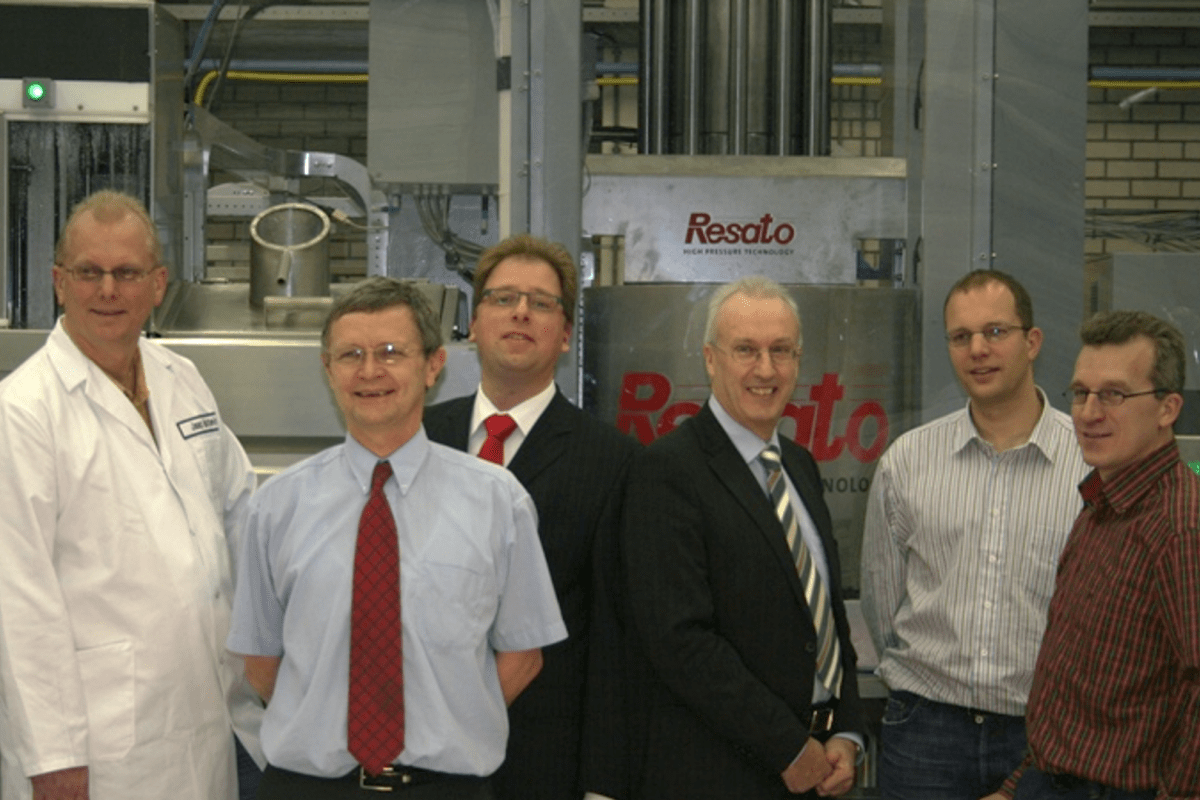
For PATS, the future is even more exciting. With ongoing research and the development of new prototypes, such as the one recently created by Resato in the Netherlands, PATS is expected to play a significant role in both the food and pharmaceutical industries. Its ability to combine pressure and heat for sterilization opens doors to applications that were previously impossible with other methods.

Conclusion

HPP and PATS represent the future of non-thermal and semi-thermal food and pharmaceutical processing. While HPP has already proven its worth in the commercial food industry, PATS is an emerging technology with vast potential for revolutionizing how we approach sterilization. As research continues, the scope of these technologies will likely broaden, offering safer, more efficient, and environmentally friendly solutions to critical challenges in both industries.

The journey from early experiments with high pressure in the 19th century to the advanced, high-pressure machines of today highlights the immense progress we’ve made in harnessing this powerful force of nature. With new developments on the horizon, such as the prototype from Resato, the future looks promising for both HPP and PATS.