Insights from a TU/e Expert and GroenLinks Member on Balancing Green Ambitions with Grid Stability and Affordability
Introduction: Alarm Bells for the Energy Grid
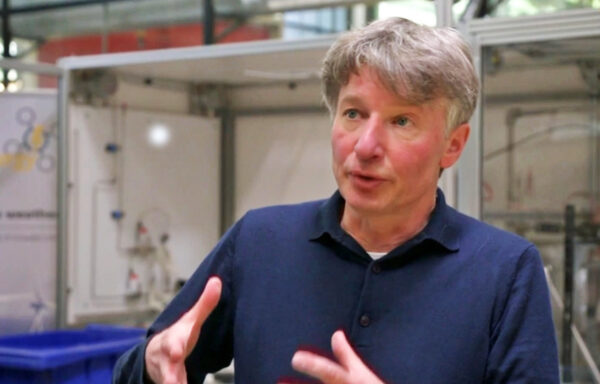
“The Netherlands heading for a blackout?” The question hung like an ominous cloud over a recent podcast episode, a question that directly addresses growing concerns about the stability of our electricity grid. The guest was Professor David Smeulders, Professor of Energy Technology at Eindhoven University of Technology (TU/e) and chair of the Engineering Thermodynamics for Energy Systems group. His reaction to the alarming title was nuanced, but not entirely reassuring. “Nou een beetje alarmistisch eh misschien,” he admitted, “maar ik denk wel dat het goed is dat we inderdaad eh toch wel voorzichtig blijven met eh met ons stroomnet en eh ja je kunt het een beetje zien als een eh als een evenwichtsoefening en eh af en toe dan zijn we toch wel eh redelijk eh ver op weg naar eh de uitgang eh ja naar de uitgang zou je kunnen zeggen ja.” (4:01) [“Well, a bit alarmist perhaps, but I do think it’s good that we indeed remain cautious with our power grid, and yes, you can see it a bit like a balancing act, and sometimes we are quite far along towards the exit, yes, towards the exit, you could say.”]
This balancing act, as the conversation reveals, is becoming increasingly precarious. Professor Smeulders is not just an academic lecturing from an ivory tower. Besides his profound technical expertise, he is also an active member and even a board member of GroenLinks (the Dutch Green party) in his hometown of Nuenen. This unique combination – the engineer who understands the technical limitations and the engaged citizen striving for a sustainable future – gives his warnings particular weight. He bridges the gap between green ideals and the stubborn technical reality.
The context of the conversation was telling: a recent, large-scale power outage in Spain served as a frightening example, while the energy transition in the Netherlands is in full swing. Could what happened in Spain also happen here? Smeulders is cautious: “Ja maar de kans is wel iets kleiner.” (4:27) [“Yes, but the chance is somewhat smaller.”] Smaller, but not non-existent. According to the professor, speaking from both his technical background and his involvement with GroenLinks, the Netherlands is gambling with its energy future by pushing the transition at high speed without paying sufficient attention to the fundamentals. We are burdening an unprepared network – a “campingnetje” (“little campsite grid”), as he aptly calls it – and risk losing sight of crucial aspects like reliability and affordability in our rush towards greening.
The “Campingnetje” (Little Campsite Grid): A Fragile Foundation
The core of Smeulders’ concern lies with the state of the Dutch electricity grid. He paints a picture of an infrastructure that was taken for granted for decades. “Dat het natuurlijk zo is dat we jarenlang vertrouwd hebben op een stroomnet dat eh dat als het ware functioneert als de stoep hè die licht er maar daar hoef je helemaal geen aandacht aan te besteden… dat is het wel zo het elektriciteitssysteem is af daar hoeven we ook niks meer in te investeren,” (7:50) is how he describes the past attitude. [“That it is, of course, the case that for years we have relied on a power grid that, as it were, functions like the pavement, right? It’s just there, you don’t have to pay any attention to it… that’s just how it is, the electricity system is finished, we don’t need to invest in it anymore.”] But those times are over.
With the energy transition, and particularly the rapid phasing out of gas, “eigenlijk alle ballen op het stroomnet want eh ja als het gas eh stopt dan eh is de stroom eh het het levensnet dat het over moet nemen.” (8:07) [“actually all eyes are on the power grid because, yes, if the gas stops, then electricity is the lifeline that has to take over.”] The problem, according to Smeulders, is that we forgot how limited that grid actually is. He quotes a statement from a former CEO of Tennet or Enexis: “toen hebben we eigenlijk vergeten dat we eigenlijk maar een eh campingnetje hebben… die heeft inderdaad gezegd: “We moeten daar toch wel mee oppassen eh als we dat niet op tijd kunnen versterken dan krijgen we toch problemen.” En dat dat begint nu toch een beetje te piepen en te kraken overal.” (8:19) [“then we actually forgot that we really only have a ‘little campsite grid’… he indeed said: ‘We really have to be careful with that, if we can’t reinforce it in time, we will get problems.’ And that is now starting to creak and groan everywhere.”]
The symptoms of this “creaking and groaning” are now visible everywhere. Companies and new housing projects sometimes have to wait years for a connection because the grid is simply full. “Dat als je een aansluiting wil hebben dat het in sommige gebieden eigenlijk al niet meer mogelijk om dat in korte tijd voor elkaar te krijgen,” (8:43) Smeulders notes. [“That if you want a connection, it’s actually no longer possible in some areas to get it done in a short time.”] At the same time, efforts are being made with might and main to realize new connections anyway, which further increases the load. The consequence: “dat betekent natuurlijk wel dat dat net dan weer eh zwaarder belast wordt dus als er een keer iets fout gaat dan is het natuurlijk ook wel eh inderdaad eh een probleem dan waar we vroeger wat reservecapaciteit hebben hadden hebben we dat nou niet meer.” (9:00) [“that naturally means that the grid is then loaded more heavily, so if something goes wrong, it is indeed a problem, whereas we used to have some reserve capacity, we don’t have that anymore.”]
The recent blackout in Spain serves as a cautionary example here. Although the exact cause is still being investigated, much points towards an overloaded and unstable network where a small fault caused a domino effect. “Als je dus een redelijk eh onstabiel net hebt dus dat betekent dat je eigenlijk een beetje de grenz aan het opzoeken bent van het net dan kun je natuurlijk ergens een kleine rimpeling veroorzaken en dat gaat dan als een olievlek gaat dat door het hele spectrum heen dus dat betekent dat je inderdaad een cascade een dominoe effect krijgt,” (10:22) Smeulders explains. [“So if you have a reasonably unstable grid, meaning you are actually pushing the limits of the grid, then you can of course cause a small ripple somewhere, and that then spreads like an oil slick through the entire spectrum, meaning you indeed get a cascade, a domino effect.”] Although the Netherlands is “misschien eigenlijk nog wel iets beter af [is] omdat wij meer verbindingen met het buitenland hebben dan Spanje” (11:02) [“perhaps actually slightly better off because we have more connections with foreign countries than Spain”], the Spanish experience warns of the risks of constantly pushing the network’s limits.
The Neglected Trilemma: Green vs. Reliable vs. Affordable
According to Professor Smeulders, the core of the problem is that the energy transition has been approached too one-sidedly. “Kijk we hebben heel lang natuurlijk gezegd van het moet allemaal groen dus we moeten vergroenen eh we moeten zo snel mogelijk die energietransitie in,” (12:13) he summarizes the dominant thought. [“Look, for a long time we naturally said it all has to be green, so we have to green, eh, we have to get into that energy transition as quickly as possible.”] “En nu blijkt eigenlijk dat we twee andere aspecten dat we dat we die eigenlijk verwaarloosd hebben die twee andere aspecten zijn wel heel erg belangrijk dat is natuurlijk betrouwbaarheid dus energiezekerheid… en het andere is natuurlijk de betaalbaarheid die hebben we ook verwaarloosd.” (12:13, 12:24) [“And now it actually turns out that we have neglected two other aspects, those two other aspects are very important, that is of course reliability, so energy security… and the other is of course affordability, which we have also neglected.”]
Reliability, or energy security, is not just a technical issue of grid stability, but has also acquired a geopolitical dimension. “Kijk 10 jaar geleden was het natuurlijk zo dat je er vanuit kon gaan dat je altijd voldoende gas kon importeren dus als je stopt met gaswinning in Groningen of in de Noordzee nou dan halen we het toch uit Rusland dat staat dat staat letterlijk in de documenten van eh van van 10 jaar geleden nou dat is dus weggevallen,” (12:35, 12:46) Smeulders emphasizes. [“Look, 10 years ago it was naturally the case that you could assume you could always import enough gas, so if you stop gas extraction in Groningen or the North Sea, well, then we’ll just get it from Russia, that’s literally stated in the documents from, eh, from 10 years ago, well, that has now fallen away.”] The war in Ukraine has painfully demonstrated how vulnerable this assumption was.
Additionally, affordability has become an increasingly pressing problem. Smeulders criticizes the political attitude that ignored this aspect for a long time. “Ik kan me nog herinneren dat een paar jaar geleden Rob Jette van D66 zei: “Ik wil het woord betaalbaarheid en haalbaarheid wil ik niet meer horen.” Nou en die twee woorden die zijn nu eigenlijk zou je kunnen zeggen terug van weg geweest,” (12:57) he sharply observes. [“I can still remember that a few years ago Rob Jetten from D66 said: ‘I don’t want to hear the words affordability and feasibility anymore.’ Well, and those two words are now, you could say, back from having been away.”] The consequences are palpable: “ik bedoel ik las laatst ergens dat we op deze manier eh 640.000 gezinnen eh met energiearmoede dreigen als die eh die tarieven van die eh gasprijzen blijven stijgen hè die energiebelasting.” (13:14) [“I mean, I recently read somewhere that this way, eh, 640,000 families are threatened with energy poverty if those, eh, those tariffs for those, eh, gas prices keep rising, right, that energy tax.”] The fact that the energy emergency fund was already depleted within weeks of opening (13:25) underscores the urgency.
Here, Smeulders’ dual role as a technical expert and GroenLinks member comes prominently to the fore. How does someone who knows the technical reality and strives for a green future navigate this complex trilemma? His technical background seems to give him a more pragmatic perspective than is sometimes heard within the green movement, without losing sight of the need for sustainability. Precisely from a GroenLinks perspective, affordability is crucial; after all, an energy transition that leads to widespread energy poverty is not a just transition. Smeulders’ plea for attention to reliability and affordability can therefore be seen as a call to anchor green ambitions in a socially and technically feasible plan.
“Wiebelstroom” (Wobbly Power): The Double-Edged Sword of Renewables
An important part of the energy transition is the switch to renewable sources like sun and wind. But this “green power” brings its own challenges, summarized in the term “wiebelstroom” (wobbly power). Professor Smeulders points to the inherent instability and unpredictability of these sources.
The impact on the grid is significant. Grid operators are tearing their hair out, especially due to the rapid rise of solar energy. “Kijk als je met netbeheerders eh spreekt dan zeggen ze: “Wij zitten op het moment echt met samengeknepen tenen eh te kijken naar bepaalde transformatorhuisjes waar we echt al extra koeling hebben aangebracht…”” (15:03) [“Look, if you talk to grid operators, eh, they say: ‘We are currently really watching with clenched toes, eh, looking at certain transformer houses where we have already installed extra cooling…'”]. This is necessary because “wanneer de zon opkomt eh in een wijk waar waar alle zonnepanelen al liggen dan komt er ineens een waterval in dit geval eh van van de zonnestroom komt het net op en die transformatorhuizen die zijn daar gewoon niet op gebouwd.” (15:21) [“when the sun rises, eh, in a neighborhood where all the solar panels are already installed, then suddenly a waterfall, in this case, eh, of solar power comes onto the grid, and those transformer houses are simply not built for that.”]
Besides the physical load, there is unpredictability. “Het andere is die voorspelbaarheid dus je kunt ook niet voorspellen wanneer dat eh wat wat dat gaat eh opleveren hè het zal op een gegeven moment komt er weer een wolk voorbij en dan valt het weer ineens weg dus dat betekent dat er echt op een andere manier met het eh net eh moet worden omgegaan.”(15:34) [“The other thing is that predictability, so you also can’t predict when that, eh, what that will, eh, yield, right? At some point, a cloud will pass by again, and then it suddenly drops off again, so that means that the, eh, grid really needs to be handled differently.”] The Netherlands now generates about half of its electricity greenly (sun and wind), comparable to Spain (if nuclear energy is not counted). This high share of variable sources means “natuurlijk toch wel dat je dan eigenlijk in inherent een instabiel systeem hebt en dat je dus inderdaad zorg moet zorgen dat je back-up hebt en snel ook.”(15:56, 16:18) [“naturally, that you then actually inherently have an unstable system and that you indeed need to ensure you have backup, and quickly too.”]
Smeulders is critical of the policy that has exacerbated this situation. In particular, the net metering scheme for solar panels, which encourages people to install panels, should have been abolished years ago, according to him. “Het is natuurlijk ook heel raar dat wij tot op heden nog steeds die eh salderingsregeling in de lucht hebben gehouden ik ik volgens mij heb ik al vier jaar geleden gezegd die moeten zo snel mogelijk af want dat betekent natuurlijk dat je de mensen stimuleert om steeds meer zonnepanelen aan te leggen… je moet niet vooruit gaan lopen op het eh op de kracht van het eh van het netwerk en dat hebben we nu wel gedaan.” (17:33, 17:49) [“It is of course also very strange that we have kept that, eh, net metering scheme in place until now, I, I think I said four years ago already that it should be abolished as soon as possible because that naturally means that you stimulate people to install more and more solar panels… you shouldn’t get ahead of the, eh, strength of the, eh, network, and we have done that now.”] Grid operators are now calling to stop stimulating more solar power: “Stop met die zonnestroom op dit moment er is gewoon echt we hebben onze doelstelling voor 2032 hebben we al gehaald en wij zitten met eh met de problemen.” (17:21) [“Stop with that solar power at the moment, there really is, we have already achieved our goal for 2032, and we are stuck with, eh, with the problems.”]
Moreover, an imbalance has arisen between sun and wind. Ideally, these complement each other (“more wind in the winter… more sun in the summer”), but “eigenlijk lopen we nu veel verder voor met zon dan wind dus eh ying yang ja dat klopt het is uit evenwicht ook daar.” (18:08, 18:34) [“actually, we are now much further ahead with sun than wind, so, eh, yin yang, yes, that’s right, it’s out of balance there too.”] Municipalities often prefer solar farms over wind turbines to avoid local resistance, which increases the imbalance and the pressure on the grid.
The ultimate solution for “wobbly power” is storage, but that is lacking. “Dat zijn essentieel de twee grote problemen en de oplossing daarvoor is natuurlijk dat wij niet genoeg opslagcapaciteit hebben je moet ergens natuurlijk een opslagcapaciteit hebben een buffer.” (20:30) [“Those are essentially the two major problems, and the solution for that is, of course, that we don’t have enough storage capacity, you naturally need storage capacity somewhere, a buffer.”]
5. Gas: The Uncomfortable Necessity
Amidst the calls for rapid greening, Professor Smeulders delivers an uncomfortable message: we cannot do without natural gas for the time being. He criticizes the, in his view, overly rosy picture painted by politicians. The interviewer quotes an earlier statement by Smeulders: “Hoogleraar energietechnologie David Smeulders zegt in het FD dat politici veel te enthousiast hebben voorgespiegeld dat we zo snel mogelijk van het gas af moeten dat is niet het eerlijke en realistische verhaal dat is altijd al duidelijk geweest dat we nog lange tijd gas nodig hebben.” (11:41) [“Professor of energy technology David Smeulders says in the FD that politicians have too enthusiastically suggested that we should get off gas as soon as possible, that is not the honest and realistic story, it has always been clear that we will need gas for a long time to come.”]
Smeulders himself confirms this view in the conversation: “we hebben ons te lang niet gerealiseerd dat we aardgas echt nog tot minstens 2045 zijn de laatste ideeën nodig hebben.” (13:55) [“we haven’t realized for too long that we really still need natural gas until at least 2045, according to the latest ideas.”] He aptly compares the rush to get off gas, without adequate, reliable alternatives being ready: “en dat betekent dat we eigenlijk een beetje onze ogen hebben gesloten van nou we gaan volle kracht energietransitie in en we hebben onze schoenen eigenlijk eh weggegooid voordat we nieuwe hadden dat daar komt het een beetje op neer.” (14:02, 14:08) [“and that means that we have actually closed our eyes a bit, like, well, we’re going full steam ahead with the energy transition, and we have actually, eh, thrown away our shoes before we had new ones, that’s what it boils down to.”]
The contrast with the old system is stark. The flexibility of gas power plants, which could be turned up or down as needed (“als dat er inderdaad wat meer stroom nodig was dan belde je de baas van de gascentrale en dan zei je kan hij even wat harder” – 20:11) [“if indeed more power was needed, you called the boss of the gas plant and said, can you turn it up a bit”], has been exchanged for the unpredictability of sun and wind. This makes balancing supply and demand, the core task of grid operators, exponentially more complex and underscores the ongoing role that gas – whether or not in combination with CO2 capture or as a basis for hydrogen – will have to play in the transition period.
6. Conclusion: A Call for Pragmatism and Balance
Professor David Smeulders’ message is clear and urgent. The Dutch power grid, our “little campsite grid,” is groaning under the pressure of a rapid energy transition that has paid too little attention to technical, economic, and social realities. The one-sided focus on greening has led to the neglect of crucial aspects like reliability and affordability, with potential blackouts and growing energy poverty as consequences. The rise of “wobbly power” from sun and wind, without adequate storage capacity and grid reinforcement, increases instability, while the necessity of natural gas as a transition fuel has been underestimated for too long.
What gives Smeulders’ analysis extra weight is his unique position. As a Professor of Energy Technology at TU/e, he possesses deep technical knowledge. At the same time, as an active member and board member of GroenLinks Nuenen, he is involved in the political and societal side of the sustainability challenge. His warnings do not stem from resistance to change, but from a profound understanding of the complexity and the need to link green ambitions with technical feasibility and social justice.
His plea is one for pragmatism and balance. A successful energy transition, Smeulders seems to argue, is one that not only aims for sustainability but integrates it with the demands of a stable, reliable, and affordable energy system. It requires honest communication, realistic planning, substantial investments in grid infrastructure and storage, and a smart mix of energy sources, including a provisional role for gas. Only by facing the technical reality and anchoring green ideals in a feasible plan can the Netherlands successfully complete the balancing act on the power grid and prevent an actual blackout.
References:
- Transcript based on: YouTube. (Publication date unknown in transcript). Opsop Live #192. https://www.youtube.com/live/49dOz7QIiRc?si=UWC4lGOlvkKWjsIN
- Profile David Smeulders: Eindhoven University of Technology. (Accessed April 30, 2025). David Smeulders. https://www.tue.nl/en/research/researchers/david-smeulders
- GroenLinks Nuenen: GroenLinks Nuenen. (Accessed April 30, 2025). David Smeulders. https://nuenen.groenlinks.nl/onze-mensen/david-smeulders
 Food4Innovations (EN) - Wouter de Heij M.Sc.