High-Pressure Processing (HPP) and Pressure-Assisted Thermal Sterilization (PATS) are at the forefront of innovations in food and pharmaceutical preservation. These cutting-edge technologies have emerged as game changers in ensuring food safety, extending shelf life, and preserving the nutritional and sensory qualities of food. While HPP has already gained significant traction in the food industry, PATS is an exciting advancement that is currently undergoing research and development, with promising applications in both food and pharmaceutical sectors.
The History of High-Pressure Processing (HPP)
High-Pressure Processing (HPP) has a rich history dating back to the late 19th century when the first experiments were conducted to investigate the effects of pressure on microorganisms. The basic principle behind HPP is that extremely high pressures—ranging from 5,000 to 6,000 bar (about 72,500 to 87,000 psi)—can inactivate pathogens and spoilage organisms without the need for high temperatures. This is particularly advantageous because it allows food to retain its original flavor, texture, and nutritional value, which are often degraded by heat-based methods.
In the 1990s, HPP began to make its way into commercial applications, particularly in the food industry. Companies recognized the value of using HPP for preserving juices, meats, and ready-to-eat meals. The process involves subjecting food products to very high pressure by immersing them in water inside a pressure chamber. The even distribution of pressure ensures that all parts of the food experience the same effect, killing harmful bacteria such as Listeria, Salmonella, and E. coli without the use of additives or preservatives.
The Emergence of Pressure-Assisted Thermal Sterilization (PATS)
While HPP is highly effective for pasteurization, it is not sufficient for sterilization. Enter Pressure-Assisted Thermal Sterilization (PATS), a technology that combines high pressure with moderate temperatures to achieve complete sterilization of products. PATS operates at pressure ranges between 5,000 and 10,000 bar, along with temperatures that are higher than those used in HPP but lower than traditional thermal sterilization methods.
PATS is particularly promising for applications where sterility is crucial, such as in ready-to-eat meals and pharmaceuticals, where the goal is to eliminate all forms of microbial life, including spores. The combination of pressure and heat works synergistically to destroy even the most resistant microorganisms. This makes PATS a revolutionary solution for the pharmaceutical industry, where the sterilization of heat-sensitive products like vaccines, biologics, and injectables is a constant challenge.
Applications in the Food Industry
HPP has become widely adopted in the food industry because of its ability to inactivate microorganisms while preserving the natural quality of food. This is crucial in the era of “clean label” products, where consumers demand fewer artificial preservatives. Some of the common applications of HPP include:
- Juices and Beverages: HPP-treated juices retain their fresh flavor and vitamin content because no heat is involved in the process. Brands like Suja Juice and Evolution Fresh are well-known examples of companies that use HPP for their cold-pressed juices.
- Deli Meats and Seafood: HPP is used to ensure the safety of products such as ready-to-eat meats and seafood. It eliminates harmful pathogens without cooking the meat, preserving the original taste and texture.
- Guacamole and Avocado Products: Avocado-based products, which are prone to quick spoilage, have found great success with HPP, allowing them to stay fresh for longer periods without losing color or flavor.
In contrast, PATS is still in its research phase but holds immense potential. The food industry has a strong interest in PATS for sterilizing shelf-stable products without compromising their nutritional value. Canned foods, baby foods, and military rations are areas where PATS could significantly improve quality by eliminating the negative effects of traditional high-heat sterilization.
Pharmaceutical Applications of PATS
While HPP is predominantly used in the food sector, PATS has significant potential in the pharmaceutical industry. The ability of PATS to sterilize without the extreme temperatures typically required for thermal sterilization makes it an attractive option for heat-sensitive pharmaceutical products. Biologics, vaccines, and certain injectable drugs require sterilization to ensure safety and efficacy, but they are often sensitive to high temperatures, which can degrade their active ingredients. PATS provides a middle ground where the combination of moderate heat and very high pressure can achieve sterilization without harming the product.
Furthermore, PATS could be a breakthrough in the area of single-use medical devices, where sterilization is crucial. Currently, most devices are sterilized using methods such as gamma radiation or ethylene oxide gas, which have their own limitations. PATS offers a potentially safer, more environmentally friendly alternative.
The Science Behind HPP and PATS
The effectiveness of both HPP and PATS lies in the physics of pressure. At the molecular level, extreme pressure causes denaturation of proteins in microorganisms, leading to their inactivation. In HPP, pressures between 5,000 and 6,000 bar are enough to break down cell walls and membranes in pathogens like bacteria and viruses.
PATS, on the other hand, leverages both pressure and heat to ensure sterility. The combination of these factors leads to accelerated destruction of microbial spores, which are typically resistant to both heat and pressure when applied independently. The pressures in PATS can go as high as 10,000 bar, creating an environment where even the most resilient spores cannot survive. The heat used in PATS—while moderate compared to traditional sterilization—enhances the effects of pressure, making it a highly efficient process.
The Future of HPP and PATS
As consumer demand for safer, fresher, and more natural products continues to grow, the adoption of HPP will likely expand across different food categories. The technology offers a solution for extending shelf life while maintaining the quality and safety of products without the need for artificial preservatives.
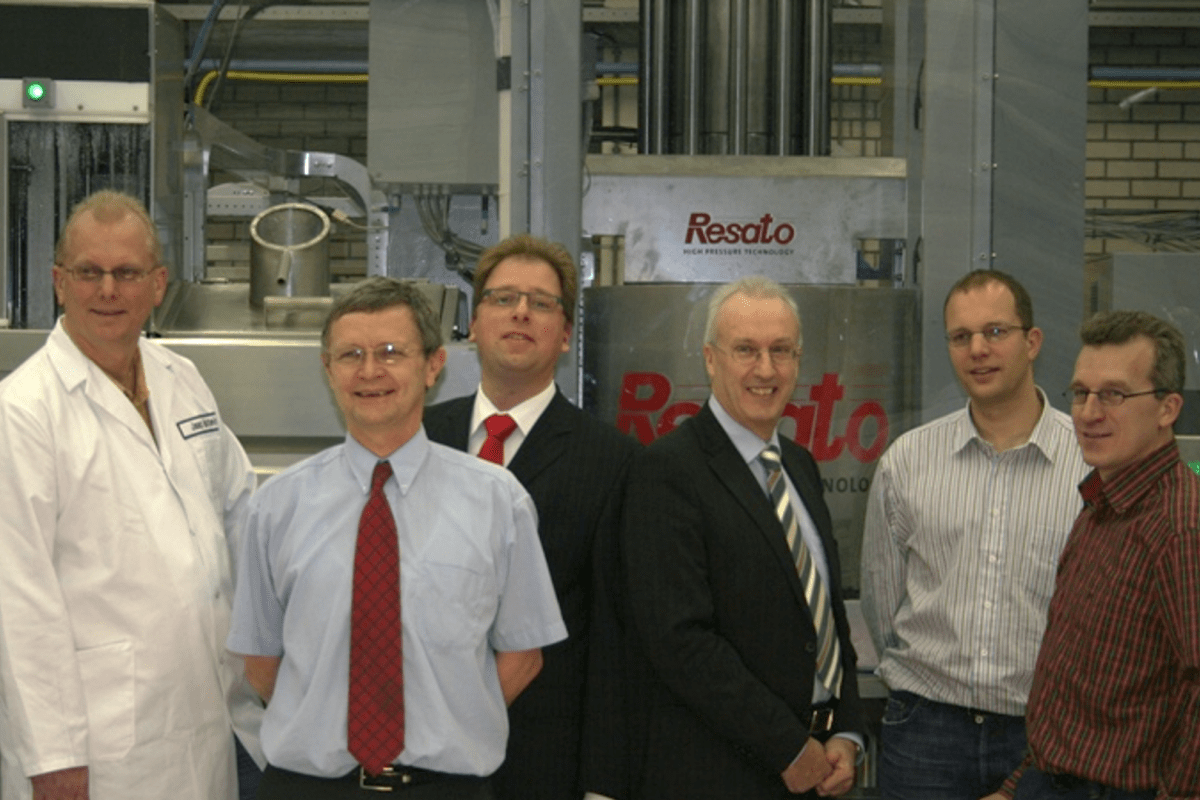
For PATS, the future is even more exciting. With ongoing research and the development of new prototypes, such as the one recently created by Resato in the Netherlands, PATS is expected to play a significant role in both the food and pharmaceutical industries. Its ability to combine pressure and heat for sterilization opens doors to applications that were previously impossible with other methods.
Conclusion
HPP and PATS represent the future of non-thermal and semi-thermal food and pharmaceutical processing. While HPP has already proven its worth in the commercial food industry, PATS is an emerging technology with vast potential for revolutionizing how we approach sterilization. As research continues, the scope of these technologies will likely broaden, offering safer, more efficient, and environmentally friendly solutions to critical challenges in both industries.
The journey from early experiments with high pressure in the 19th century to the advanced, high-pressure machines of today highlights the immense progress we’ve made in harnessing this powerful force of nature. With new developments on the horizon, such as the prototype from Resato, the future looks promising for both HPP and PATS.
 Food4Innovations (EN) - Wouter de Heij M.Sc.